
In this interview, Dr. Dara Fitzpatrick, senior lecturer at University College Cork and developer of BARDS (Broadband Acoustic Resonance Dissolution Spectroscopy), shares how a simple observation evolved into a powerful analytical tool – and how it is now contributing to the FreeHydroCells project in advancing green hydrogen technologies.
Q: You’ve been deeply involved in developing BARDS from its origins at UCC. What first sparked your fascination with acoustic spectroscopy?
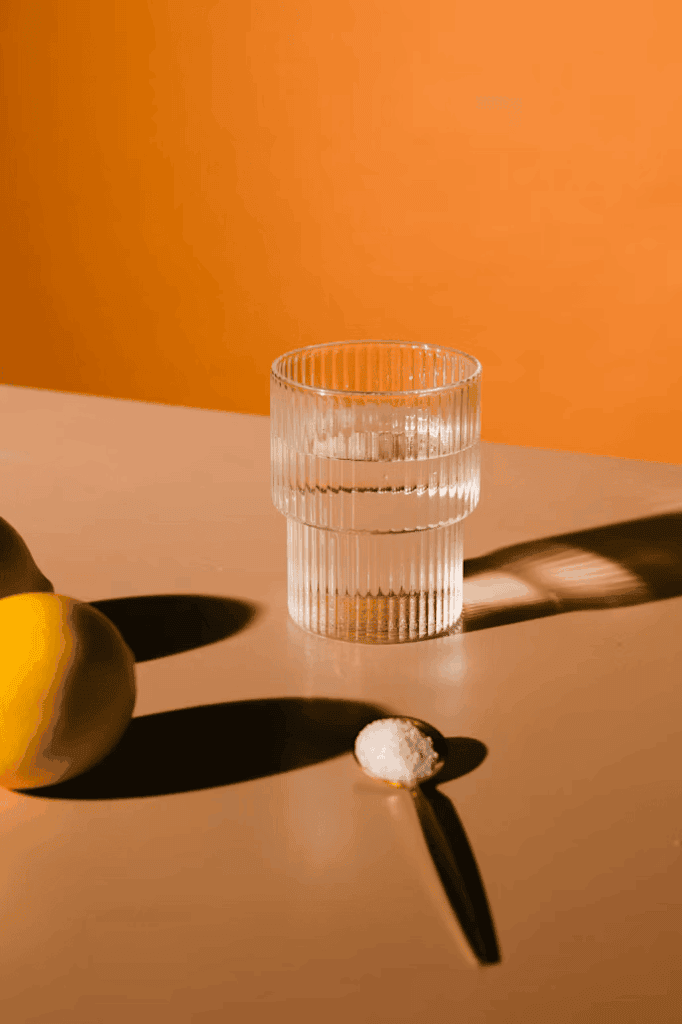
It actually started as something you can do as a simple kitchen table experiment. Take a glass of water, add salt, stir it, and listen – you’ll hear the pitch change as the salt dissolves. I began to think that maybe different salts would produce different sounds based on their different dissolving solubilities. That triggered the idea to make an laboratory instrument that could measure, interpret and understand these sounds. That was really the starting point.
Q: For readers new to the BARDS instrument, how would you describe the technology and what makes it unique?
At its core, the BARDS instrument measures changes in the compressibility of a fixed quantity of liquid in a receptacle caused by gas evolution (reactions in mixed solutions producing gases, like in beer) or dissolution (e.g. salt dissolving in water).
Dissolution may seem like a random and chaotic process, however, it actually turns out to be highly ordered. Under controlled conditions, each material produces a reproducible acoustic signature – almost like a fingerprint.
That makes the BARDS instrumentation a powerful analytical tool. We can use it and the associated chemical and physical methods to study things like coating thickness on medicines, porosity, density, and even distinguish between different crystalline forms of the same substance.
What makes the BARDS instrument even more powerful is that it can monitor processes or systems in a completely passive way, not affecting the process or system during the measurement. This is an important capability, especially for finely tuned or very sensitive processes and systems.
It can also be combined with other types of independent characterisation methods, providing a passive monitoring assessment that can support or contradict other findings.
Q: What made FreeHydroCells an exciting project for BARDS to be part of?
From early discussions, it was clear that hydrogen production involves gas evolution – and that’s exactly what the BARDS system was created to analyse.
Our technique detects changes in the compressibility of a solution caused by gas formation. Hydrogen is a very compressible gas, so it produces a strong signal. In fact, we’ve observed minute gas responses passively even before conventional instruments like Potentiostats can detect anything through their direct electrical force/sense methods.
What’s particularly powerful is that we don’t need to collect or concentrate the gas – we can monitor it in real time, in a passive way, directly at the electrode. That made FreeHydroCells a very natural fit.
Q: How does BARDS enhance understanding of green hydrogen production efficiency in these systems?
Before even working with novel photoelectrodes, we can study standard hydrogen electrodes – essentially platinum in an acidic solution – to understand key parameters like surface area, applied potential, and electrolyte concentration.
From there, we can investigate things like bubble growth and detachment, which are critical for efficiency. For example, at what size does a bubble detach? Does that size change with surface curvature or electrolyte conditions? How do bubbles behave in more complex, three-dimensional electrode structures? By passively assessing and comparing, we can begin to provide some answers and interpretations of observations.
These insights allow us to inform novel photoelectrode design early on, rather than relying on trial and error with more complex, costly, time-consuming systems, designs of experiments and costly case studies. In some cases, the information cannot be obtained by other direct methods since these change the system and behaviour is altered, where as the BARDS analysis kit is passive and external.
This type of passive monitoring of gases over time makes it ideal for FreeHydroCells, both for novel photoelectrode assessment and for reproducibility of behaviour.
Q: Why is bubble behaviour so crucial in photoelectrochemical (PEC) water splitting?
If bubbles accumulate on the electrode surface and don’t detach, they reduce efficiency. They block light from reaching the surface and reduce the active area available for reactions, reducing the rate of hydrogen gas fuel production.
Ideally, you want a continuous cycle – bubbles form orderly, growth is minimised, detachment is rapid, and the surface is clear quickly for the next cycle of gas production. Maintaining that cycle is key to efficient hydrogen production.
Q: Have you observed any surprising patterns in how bubbles behave?
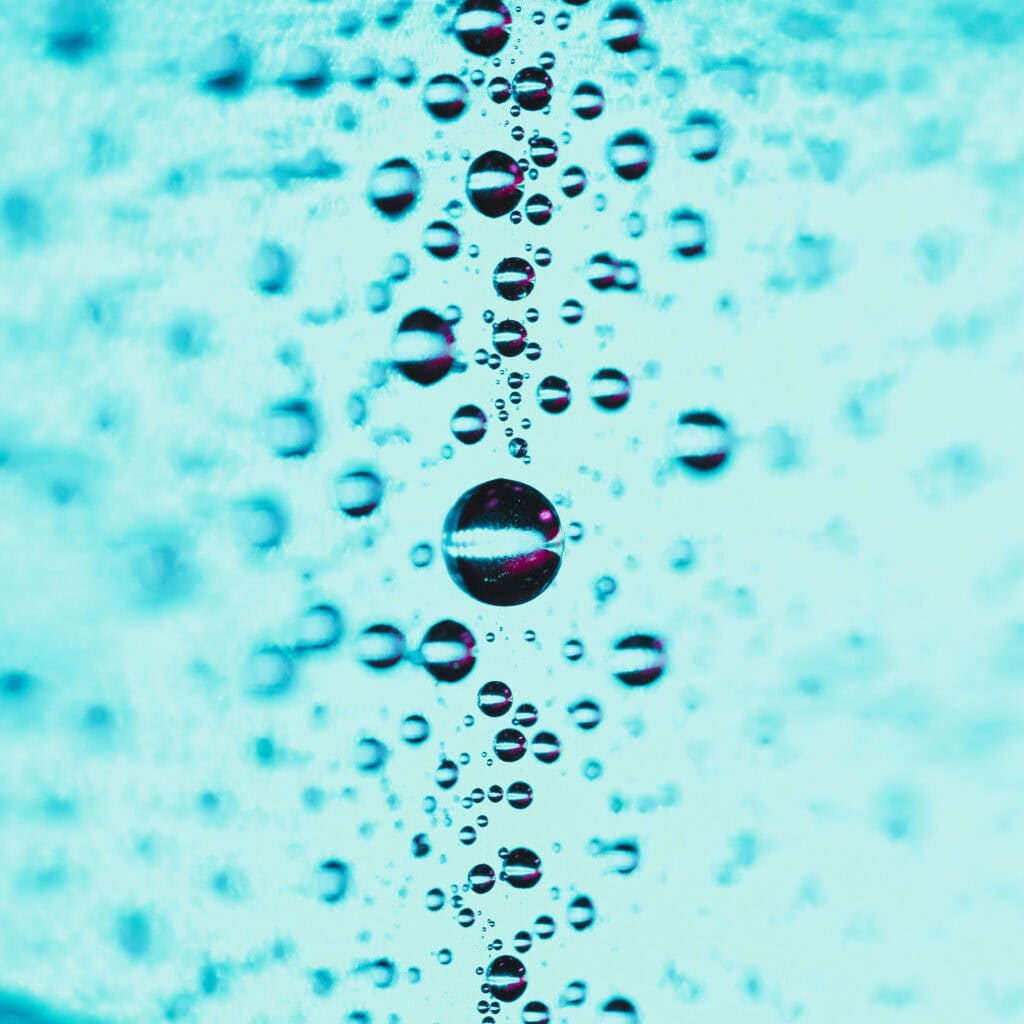
Yes – one interesting finding is that bubble nucleation isn’t always random. On certain materials, and under certain conditions, we’ve observed bubbles forming in ordered, linear patterns.
That suggests the underlying material and/or electrical properties influence where bubbles form. If we can understand that, we could potentially design novel photoelectrodes with specific gas nucleation sites, spacings, and thus densities – essentially scientifically engineering bubble behaviour. This is something we are looking at in FreeHydroCells.
Q: How does BARDS contribute to optimising materials used in PEC cells?
A big focus is on how different materials and coatings affect hydrogen evolution. A problem with PEC cell photoelectrode surfaces is their general instability in electrolytes, and this makes them deteriorate quickly, reducing their performance capability to become a viable solution with a long lifetime. This is especially true when using catalytic materials at the photoelectrode surfaces.
In FreeHydroCells, we create what are termed buried electrolyte/photoelectrode junctions that are protect the photoelectrode with thin surface materials that are aimed to stabilise the photoelectrode surface and provide a stable PEC cell performance over a long lifetime.
What we’ve found is that thinner surface protection coatings often improve electrolysis performance, but you can’t go too thin or you lose stability. So it becomes a balancing act between activity and durability. The BARDS instrument allows us to monitor these effects passively and in real time, which is something that’s very difficult or impossible to achieve with other techniques, especially those techniques that are interventionist rather than passive.
As we move towards trying to enable a novel PEC system technology in FreeHydroCells, passive monitoring of the system performance over time – especially in wireless or unassisted water splitting systems – will be an important capability for reliability and operational monitoring, and the BARDS system is well-positioned for development to meet that challenge ahead.
Q: What have been some of the most important findings from BARDS measurements in FreeHydroCells so far?
A few key insights stand out:
We’ve shown that hydrogen production can occur in neutral buffer solutions – not just strong acids or bases. That’s important for stability and scalability. This is a key observation since FreeHydroCells wants to implement a low-cost and easy electrolyte using a simple and neutral pH 7 buffer-water solution.
We’ve been able to determine the critical bubble detachment diameter, which helps guide electrode design.
Interestingly, unlike bubbles in carbonated drinks, hydrogen bubbles have been observed in certain systems not to grow after formation. If this behaviour could be harnessed, it would simplify greatly how we design pathways for the bubblesto escape rapidly and allow us to maximise the rate of green hydrogen fuel production.
These findings all feed directly into improving PEC cell performance in FreeHydroCells.
Q: What has inspired you most about working on FreeHydroCells?
The objective itself – developing green energy solutions – is very compelling.
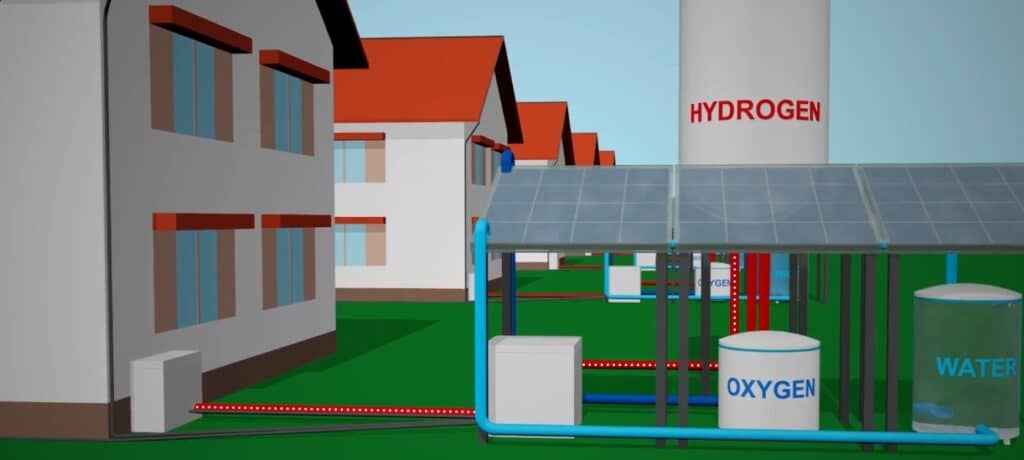
There’s also the potential to democratise energy production, particularly in developing regions. That’s a powerful idea. See the FreeHydroCells distributed energy reactor vision video on the project website.
And beyond that, the whole team across all partners has been excellent. There’s been a real sense of teamwork commitment, even when challenges came up, we solved them together. Seeing tangible progress has been very rewarding.
Q: What role do you see FreeHydroCells playing in the future of clean energy?
The work is genuinely state-of-the-art. From what we’ve seen, it’s among the few approaches bringing forward novel materials combined with novel scientific engineering capable of producing green hydrogen under solar conditions.
Even if some optimisation is still needed, proving the concept is a major step. From there, improvements can follow. I think it will have a strong legacy.
Q: Looking ahead, what are the key considerations for scaling this technology?
Achieving high efficiency while maintaining cost-effectiveness is a major factor. Correctly scientifically engineered PEC systems could potentially be significantly more productive than conventional solar panels, wind or hydroelectric driving electrolysers.
There are also advantages in terms of land use and materials – these systems use earth-abundant materials and can reduce the footprint required for energy generation.
And importantly, green hydrogen can be stored and used when needed, unlike solar electricity which must be used immediately or stored in batteries which are yet to be sustainable.
Q: What challenges still need to be addressed for green hydrogen technologies more broadly?
Two main ones: investment and perception.
Globally, fossil fuels still receive enormous subsidies, while emerging technologies like green hydrogen receive comparatively little. That slows progress.
There’s also public perception—people often associate hydrogen with danger. But in reality, it’s handled safely and used in controlled systems like fuel cells. Education will be key.
Q: Finally, outside the lab, what keeps you grounded or inspires your creativity?
Nature is a big one. I was just out on a walk with students birdwatching and identifying plant species – things that are right in front of us but often overlooked.
Music as well – I’ve played piano and oboe – and I stay active with sports like football and tennis. Those things help keep a balance.
Q: Any final thoughts you’d like to leave readers with?
The potential impact of this work is enormous – but we need to move faster.
The science is there, the progress is real, but greater investment and broader engagement will be essential if we’re serious about addressing climate change.