
We are delighted to share that the latest publication from the FreeHydroCells project has not only been published in ACS Electrochemistry by the American Chemical Society, but has also been selected as the cover feature of the issue – a testament to both the scientific quality and visual impact of the work in hydrogen research.
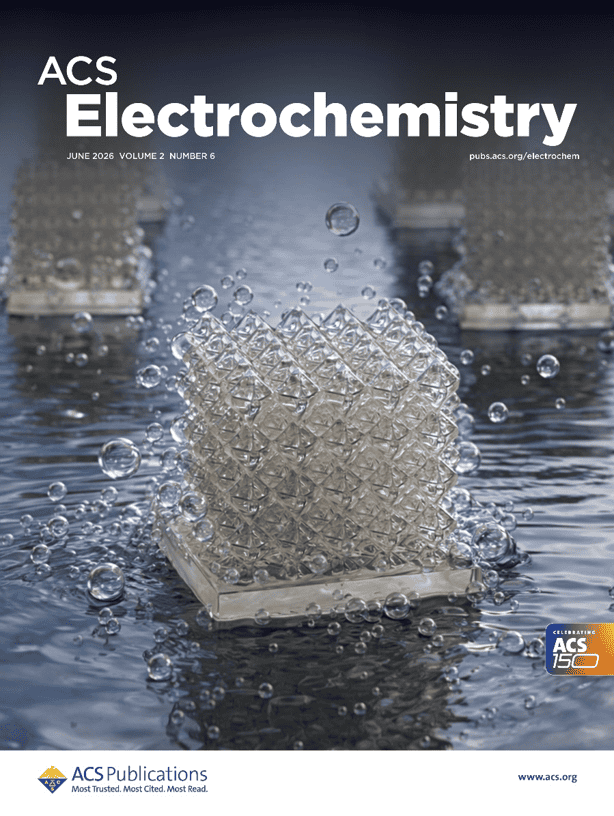
At its core, this research tackles a surprisingly tricky challenge in clean energy: how to efficiently produce hydrogen gas from water. Hydrogen is widely seen as a key fuel for a greener future, but the process of making green hydrogen – called water electrolysis – comes with hidden inefficiencies. One of the main culprits? Tiny bubbles that are hard to detach.
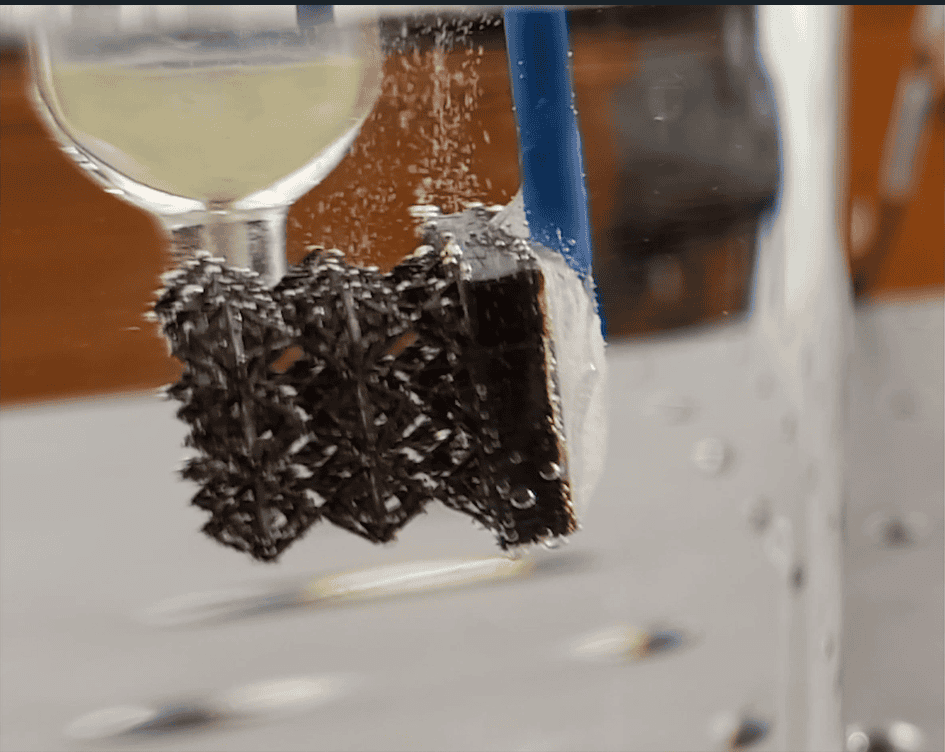
When hydrogen forms during electrolysis, it appears as bubbles on the surface of electrodes. These bubbles can block active areas, stick inside pores, and reduce how efficiently the system works. The FreeHydroCells team set out to better understand this “bubble traffic” – how bubbles form, move, and escape.
To do this, the researchers used advanced 3D printing techniques to create intricate, sponge-like electrode structures known as microlattices. These structures can be precisely designed with different shapes, pore sizes, and internal pathways. By coating them with catalytic materials and testing them under electrocatalytic operating conditions, the team could directly observe how geometry influences bubble behaviour.
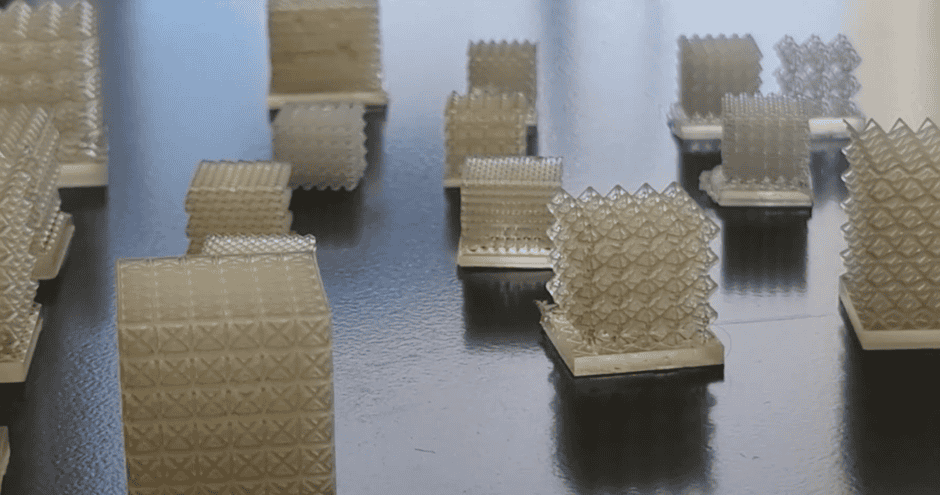
“Using a type of 3D-printing called vat-polymerisation, we can design and print high surface area lattice electrodes that would be far more difficult to obtain using traditional manufacturing methods.” explains the lead author, Dr Matthew Ferguson, whose work within the FreeHydroCells project featured in an earlier blog post. “However, we quickly realised that high surface area is far from the only factor that results in efficient hydrogen producing electrodes. Bubble trapping became a large hurdle for optimal catalytic performance. Through electrochemical assessments, simulations, and a novel technique called broadband acoustic resonance dissolution spectroscopy (BARDS), we were able to determine not only which lattice electrode produces hydrogen bubbles the most effectively, but also which of them efficiently channel the gas bubbles out of the lattice structure for collection and storage.”
The findings reveal an important insight: more surface area does not always mean better performance. While porous structures can increase the area available for reactions, they can also trap larger bubbles, preventing them from escaping. This reduces efficiency and can counteract the benefits of the design.
Through a combination of experiments, simulations, and acoustic sensing techniques (which “listen” to bubbles forming in real time), the team demonstrated that the movement and release of bubbles is just as important as creating them. Some structures allowed bubbles to flow easily, while others caused clogging and trapping, limiting hydrogen output.
This insight is crucial for designing the next generation of hydrogen technologies. By carefully balancing structure, material, and bubble dynamics, scientists and engineers can create more efficient systems for clean fuel production.
The project coordinator, Dr Ailbe Ó Manacháin, expressed his great satisfaction with these outcomes. “The efficient production of green hydrogen fuel for future photoelectrochemical systems technology that produces a carbon-neutral alternative energy source to replace fossil fuels is the main proof of concept verification objective of the FreeHydroCells project. It was and still is an enormous challenge, and our project is designated by the EU as a ‘high-risk/high-reward’ project as a result. Therefore, every single innovative advance is important to us. We fully recognise that electrode surface optimisation, microlattice structuring and gas bubble management are key factors in our efforts. The work of the UCC and BARDS authors has been truly excellent and very impactful. From my perspective of being the lead PI and coordinator, multiple levels of innovation and systems integration is critical for enabling a new technology development for the future, and each step forward we can achieve that improves hydrogen gas production efficiency is beneficial and very welcome, I congratulate my colleagues.”
Ultimately, this advanced research supported by the EU Horizon Europe programme through CINEA shows that solving global energy challenges sometimes comes down to understanding the competing complexities of the smallest detail – even something as simple as how bubbles form, interact and evolve. With its innovation, the FreeHydroCells project is continuing to bring impactful and disruptive solutions to help bring efficient, scalable – and very importantly – green hydrogen energy closer to reality for the benefit of our planet and environment.
Find the publication here. Also watch a 3-minute video on the future vision of the FreeHydroCells project for a radical and disruptive energy solution idea that could potentially be decentralised and distributed across communities for off-grid resilience. Pushing the limits of hydrogen research!